47 Video Marketing Facts in Numbers for 2026
We gathered fresh 2025-2026 video marketing statistics: real numbers on reach, ROI, short-form, platforms and AI video, each one linked to its primary source.


I will look at your site and answer your questions on the topic of this article. 30 minutes, no slide decks, no pressure.
Book a consultationIn short: in 2026, 91% of companies use video marketing, 82% of marketers report a good ROI, and short vertical clips have become the №1 format by return. Below are 47 verified figures from Wyzowl, HubSpot, Statista, Pew Research and other sources, grouped by theme: consumption, ROI and conversions, formats, platforms, AI and trends.
Video stopped being a "nice-to-have" add-on to your content strategy a long time ago — it has become the core of it. But the market moves fast: what worked in 2023 is already outdated today. That's why we've collected only current data from 2025-2026 — with links to primary sources so you can verify every figure.
If you're just building your strategy, start with our breakdown of video marketing and our guide to YouTube promotion — and this article will give you the data foundation for your arguments.
Why you can trust these numbers
We didn't just dump a pile of percentages on you. Instead:
- Only fresh data. Social platforms and audience habits change within months. So here you'll find 2025-2026 statistics, with no outdated figures.
- Verified primary sources. We went to the original reports (Wyzowl, HubSpot, Statista, Pew Research, Sprout Social, etc.), not retellings of retellings.
- Real research, not forecasts. We rely on survey and measurement data, not guesses about the future.
- A link to every source. Any figure can be double-checked — the links are right there in the text.
Video consumption: how much and how people watch
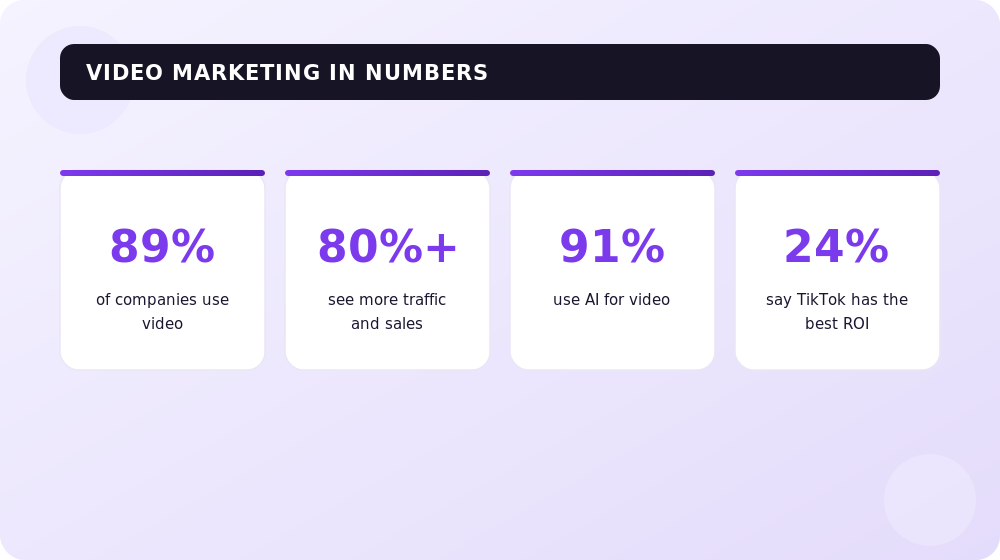
Audiences consume video at volumes that seemed impossible just a few years ago. Here are the key figures.
- On average, a person spends about 17 hours per week watching online video — roughly 2.5 hours a day (Synthesia, 2025).
- 96% of people have watched an explainer video at least once to learn more about a product or service (Wyzowl, 2026).
- 84% of consumers want to see more videos from brands in 2026 — a figure that has stayed stable for 8 years running (Wyzowl, 2026).
- When people are asked how they'd most like to learn about a product, 63% choose a short video — easily beating text articles (12%), infographics (7%) and webinars (4%) (Wyzowl, 2026).
- Gen Z favours video platforms: 63% visit YouTube daily, ahead of Instagram (58%) and TikTok (56%) (Attest, 2026).
- Short vertical clips have become the internet's dominant format — by some estimates, short-form video accounts for over 80% of traffic on social platforms (AutoFaceless, 2026).
Alyona Polyukhovich explained which type of video content suits your business in her video.
Business and video marketing: how deep video has gone
Marketers don't just experiment with video — they build their strategy on it.
- 91% of companies use video as a marketing tool in 2026 — back to an all-time high after a slight dip in 2025 (Wyzowl, 2026).
- 93% of video marketers see video as an important part of their overall strategy (Wyzowl, 2026).
- 67% of marketers who don't yet use video plan to start in 2026 (Wyzowl, 2026).
- 92% of marketers plan to spend the same or more on video in 2026 (Wyzowl, 2026).
- 59% of teams create video in house, 32% combine in-house production with external vendors, and only 10% fully outsource it (Wyzowl, 2026).
- The most popular video use cases are social media videos (69%) and explainer videos (68%), followed by customer testimonials (57%) and video ads (48%) (Wyzowl, 2026).
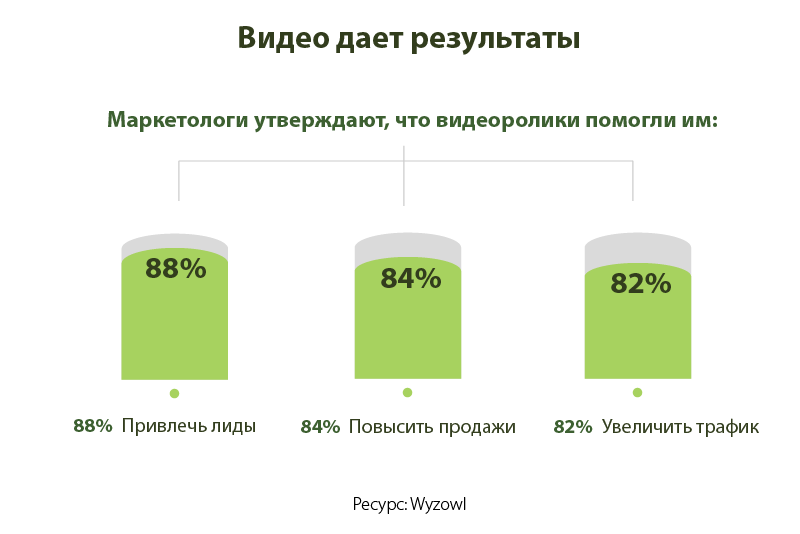
ROI and conversions: what video gives a business
The key question for any marketer is whether video pays off. The numbers answer unambiguously.
- 82% of marketers say video has given them a good ROI (Wyzowl, 2026).
- 83% of video marketers note that video has directly increased sales (Wyzowl, 2026).
- 85% of marketers say video helps them generate leads (Wyzowl, 2026).
- 93% of video marketers say video has increased brand awareness, and the same share say it improved user understanding of their product (Wyzowl, 2026).
- 82% report increased traffic, and the same share report longer visitor dwell time on their site (Wyzowl, 2026).
- Video on a landing page can lift conversions by up to +86% (Levitate Media, 2026).
- 85% of people say a video has convinced them to buy a product or service (Wyzowl, 2026).
- 89% of consumers say video quality affects their trust in a brand (Wyzowl, 2026).
Formats: short clips versus long
Short video wins the format battle, but long-form still has its niche.
- Short video is the most-used format among marketers and the №1 format by ROI: it accounts for 49% versus 29% for long video and 25% for live streaming (HubSpot, 2026).
- Most marketers (71%) consider videos between 30 seconds and 2 minutes the most effective (Wyzowl, 2026).
- Live action remains the most popular production type (51%), followed by animation (23%) and screen recording (19%) (Wyzowl, 2026).
- There's a generational gap: about 80% of Gen Alpha prefer short content, while Gen Z and millennials consume a mix of short and long formats (AMT Lab, 2025).
- The cost of a single ready short clip assembled with AI has dropped to $40-150 versus $400-2,000 with traditional production (TrackingTime, 2026).
Platforms: YouTube, TikTok, Instagram and LinkedIn
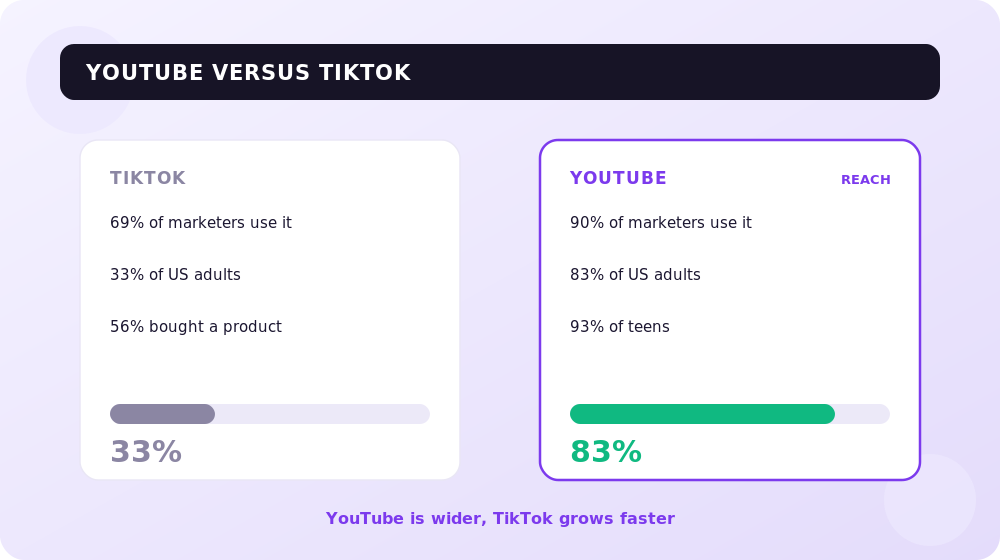
YouTube remains the undisputed king, but the competition for attention is intensifying on every front.
- YouTube has over 2.7 billion monthly active users who together watch around a billion hours of video per day (DemandSage, 2026).
- YouTube Shorts rack up over 200 billion views per day — almost triple the figure a year earlier (DemandSage, 2026).
- TikTok has around 1.59 billion monthly active users (Statista, 2025).
- YouTube is the most-used platform for hosting video (82% of companies), followed by LinkedIn (70%), Instagram (69%), Facebook (66%) and only then TikTok (40%) (Wyzowl, 2026).
- YouTube also leads on effectiveness (69%), followed by Instagram (56%), Facebook (55%) and LinkedIn (50%); only 29% of marketers call TikTok effective (Wyzowl, 2026).
- Video is the fastest-growing format on LinkedIn: views grew by roughly 36% year over year, and video is published twice as often as other post types (Teleprompter, 2026).
- The average TikTok user spends 95-97 minutes per day in the app — noticeably more than on Instagram (SQ Magazine, 2025).
Video and sales: social commerce
Video increasingly leads the user straight to a purchase, bypassing intermediate touchpoints.
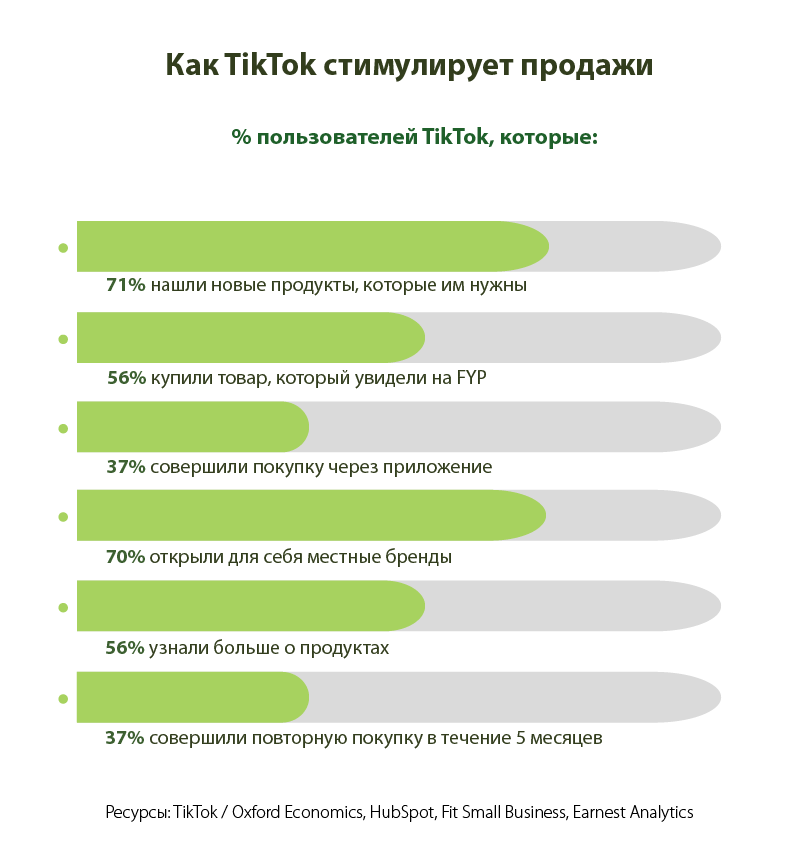
- Around 71.4 million people made a purchase through TikTok Shop in 2025 — up 24.5% on the previous year (Capital One Shopping, 2025).
- 45.5% of US TikTok users made at least one social-commerce purchase on the platform in 2025 (Capital One Shopping, 2025).
- 49% of users say TikTok creators inspire them to explore the products and brands they promote (Sprout Social, 2026).
- TikTok Shop sales in the US grew by 120% year over year in 2025 (Capital One Shopping, 2025).
- The live-streaming market reached $108.7 billion in 2025, while US live e-commerce sales grew almost 50% to $14.64 billion (GetStream, 2026).
AI in video marketing
In a single year, AI went from experiment to a working video-production tool.
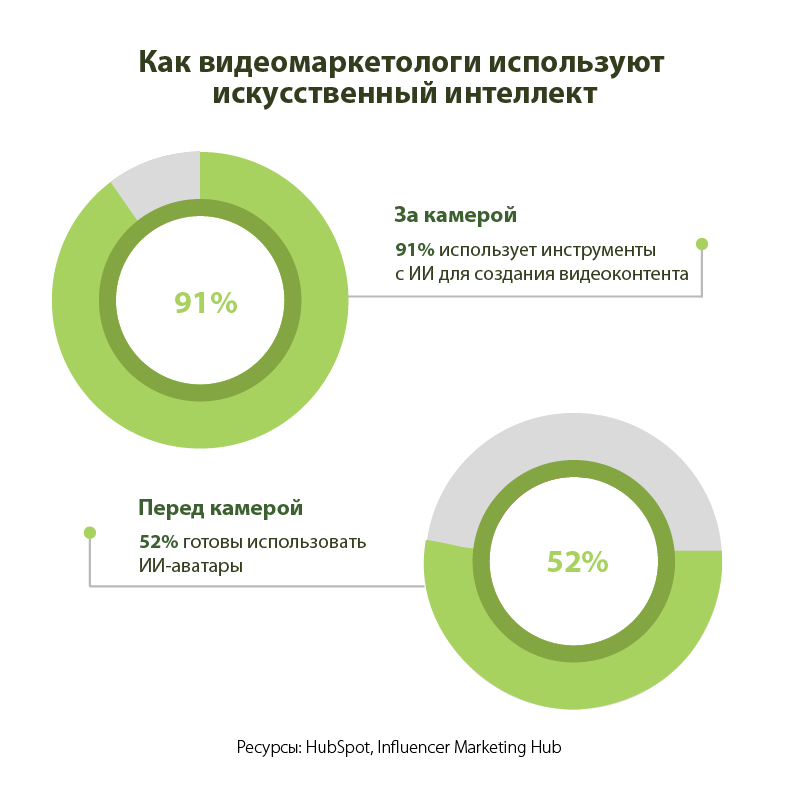
- 63% of video marketers have already used AI tools to create or edit clips — up from 51% a year earlier (Wyzowl, 2026).
- By some estimates, AI video already accounts for 35-40% of branded video content at mid-size companies (AutoFaceless, 2026).
- Brands running AI-generated video ads report conversions roughly 27% higher than static banners (AutoFaceless, 2026).
- The arrival of generative models like Sora, Runway and Kling has sharply lowered the barrier to entry: text-to-video is now within reach even for small teams (Precision AI Academy, 2026).
2026 trends: what matters to factor in
A few shifts worth building into your strategy right now.
- Vertical and sound-off. Short vertical clips with captions have become the standard — most users watch without sound.
- Video as a search answer. YouTube and TikTok are increasingly used as search engines, and video is landing in AI answers and overviews — a new organic traffic channel. For more on preparing content for search, see our piece on search promotion.
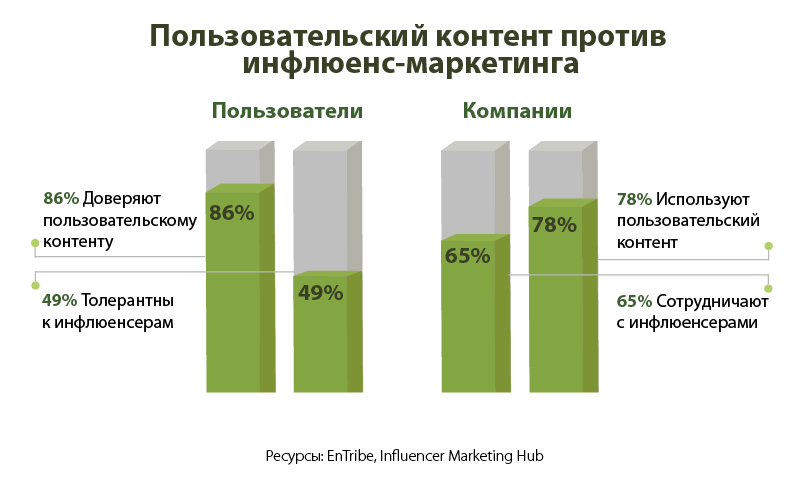
- Authenticity over polish. UGC and "human" clips outperform glossy ads on trust.
- AI is an accelerator, not a replacement. AI takes over the routine (drafts, voiceover, clipping), but strategy and the idea stay with the human.
- Live streaming and live commerce are growing at double-digit rates, especially in e-commerce.
Frequently asked questions
How many companies use video marketing in 2026?
According to Wyzowl, 91% of companies use video as a marketing tool — an all-time high. At the same time, 67% of those who don't yet use video plan to start in 2026.
What ROI does video marketing deliver?
82% of marketers report a good ROI from video. 83% note a direct increase in sales, 85% report lead generation, and video on a landing page can lift conversions by up to +86%.
Which is more effective — short or long video?
Short video is the №1 format by ROI and the most used among marketers. That said, 71% consider 30 seconds to 2 minutes the optimal length. Long video retains its value for educational and B2B content.
YouTube or TikTok — which to choose?
YouTube remains the platform with the widest reach and the highest effectiveness (2.7 billion users; 69% of marketers consider it effective). TikTok is strong in short content and social commerce, especially for younger audiences, but only 29% of marketers call it effective.
Should you use AI to create video?
Yes — 63% of marketers already do. AI sharply reduces production cost and time (a finished clip from $40-150), but it works best as a routine accelerator rather than a full replacement for the idea and strategy.
How important is video quality?
Very: 89% of consumers say video quality directly affects their trust in a brand. Authenticity, though, is valued above polish — UGC often works better than "glossy" advertising.
Want to turn these numbers into real sales? At SEOquick we build a video strategy around your goals — from YouTube promotion to integrating video into your overall video marketing and search promotion. Get in touch — we'll discuss which formats will deliver the most for your specific business.
Instagram Statistics 2026: 60+ Fresh Numbers on Audience, Reels & Ads
Up-to-date Instagram statistics for 2026: 3 billion users, demographics, engagement, Reels, advertising, shopping and trends. Every number with a source link.
Read →
Search Everywhere Optimization: Ranking on TikTok, YouTube, Reddit and AI Search
Your customer does not only search on Google: 49% of consumers search on TikTok, Reddit pulls 842M organic clicks a month, and YouTube is the source of roughly one in four AI Overview citations. Here is how a business owner picks 2–3 platforms without burning the budget.
Read →
TikTok SEO in 2026: How to Rank in TikTok Search and Get Into Google
TikTok is now a second search engine: 49% of users search on it, 65% of Gen Z. Here is how TikTok indexes video (ASR, OCR, captions), how to optimize clips for search, and how TikTok content also surfaces in Google — with 2026 data and SEOquick experience.
Read →Want to apply this to your site?
We will review the current situation, find the first growth levers, and suggest a practical working format.