Why rewriting does not work in 2026: uniqueness ≠ value
Rewriting promises a fast 'unique' text, but uniqueness of words stopped being Google's currency long ago. We break down why synonymizing and spinning kill a site in 2026 — and what to replace them with.


I will look at your site and answer your questions on the topic of this article. 30 minutes, no slide decks, no pressure.
Book a consultationShort answer: rewriting does not work because uniqueness of words is not the same as uniqueness of value. When a page just retells a competitor in different words, Google, AI systems, and a real human have no reason to choose it. In 2026 the search engine ranks not the "different-looking" text, but the text with real experience, fresh data, and a solution to the user's task. Below — why rewriting, synonymizing, and spinning turned from a "lifehack" into a direct risk for your site, and what to do instead of rewriting.
Looking for traffic to your site? SEOquick will bring you 100% organic!
SEO is your long-term and reliable source of traffic from Google and Bing.
We will do comprehensive SEO promotion: content, reputation, on-page optimization, link building.
Our SEO is white-hat, our goal is your way to the TOP! We know exactly what and how. That is exactly what you need, right?
What rewriting is and why it stopped working
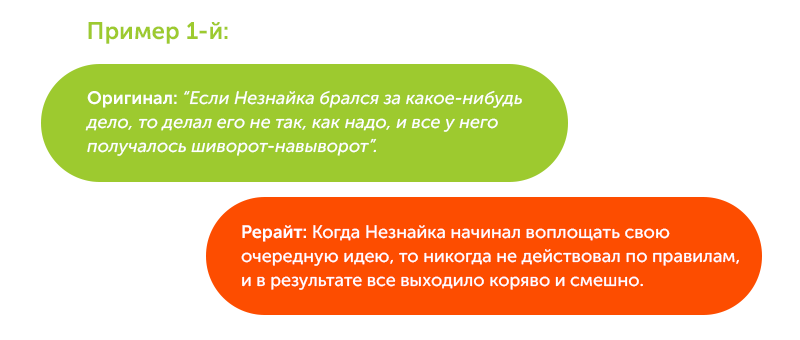
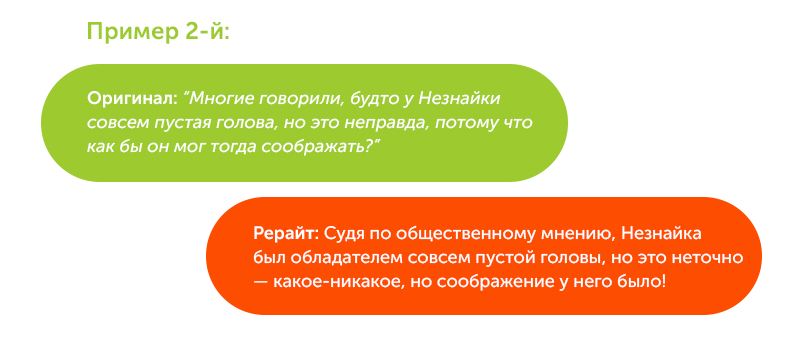
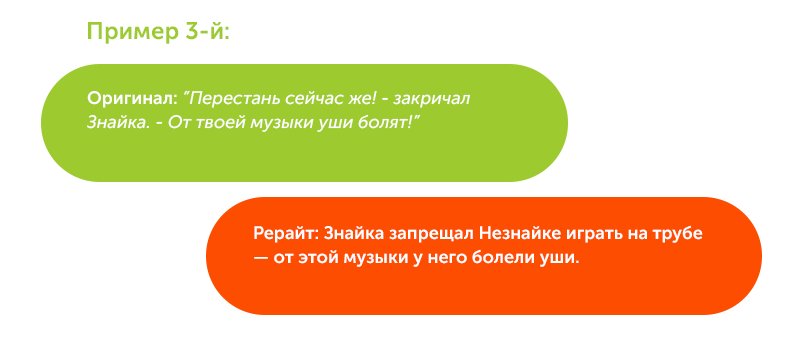
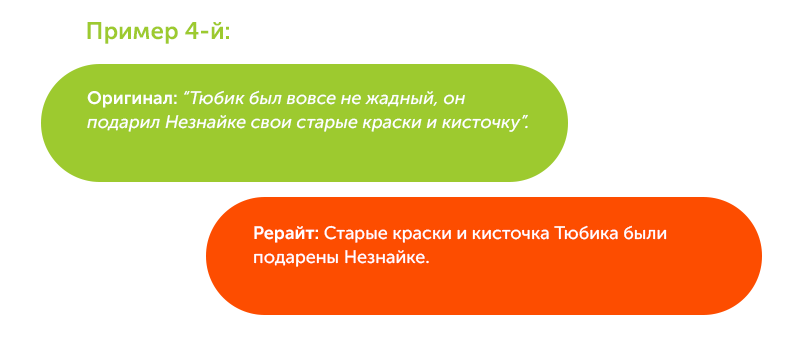
Rewriting is reworking someone else's text to increase its "uniqueness" while keeping the meaning. Synonymizing goes further: it swaps words for synonyms. Spinning is the automated generation of dozens of variants of one text via templates like {buy|order|purchase}. All three share one thing: they change the form but add not a gram of new value.
Ten years ago this worked. Sites collected someone else's content, rewrote it as a "school retelling," ran it through anti-plagiarism checks to 90–100% — and ranked. Today the logic of search has flipped. Google and AI systems (AI Overviews, AI Mode, ChatGPT Search, Perplexity) assess not the percentage of character uniqueness, but value to the user: is there experience, data, an answer to a current intent in the text.
In plain words: a unique text and a useful text are two different things. You can write absolutely "unique" 5,000 characters and say nothing new. It is exactly such texts that in 2026 the search engine not only ignores — it demotes the whole site for them.
How rewriting differs from real content
Original text carries the author's thoughts, experience, and conclusions. Rewriting only repackages someone else's thoughts. From Google's point of view the difference is fundamental: the updated rater guidelines state directly that the lowest rating goes to content that is "copied, paraphrased, or generated with little effort, little originality, and little added value for visitors." Rewriting falls into this category by definition.
10 reasons why rewriting kills SEO in 2026
- No new experience. Google's March 2026 core update amplified the first "E" in E-E-A-T above all other signals. Text without personal, verifiable experience loses even to less polished pages.
- No original examples or data. Screenshots, case studies, numbers from your practice — the things you cannot copy from a competitor. Rewriting lacks them by definition.
- No answer to a new intent. Demand changes monthly. A rewrite of an old article answers yesterday's user query, not today's.
- No structure for extraction. AI engines pull citation material from the first ~30% of the page. If your "first screen" is a competitor's retelling, there is no reason to cite you.
- Duplicates and cannibalization. Several rewritten articles targeting one intent split authority among themselves. Instead of one strong page you get three weak ones, none in the TOP.
- Scaled content abuse risk. Since 2024 Google method-agnostically penalizes "mass creation of unoriginal content to manipulate rankings — no matter how it is created." Spinning is a textbook example.
- No connection to the product. A rewrite of a generic overview article does not lead to your service and does not convert.
- No editorial point of view. AI systems and raters increasingly recognize texts without an author's standpoint.
- Detection of rewriting. Modern detectors (for example, Originality.ai) hold up to 96.7% accuracy on paraphrased and spun content. Synonymizing no longer masks the source.
- No measurement. Rewriting is done "just because," without a hypothesis or metrics. So there is no chance to understand whether it worked.
Google and AI against rewriting: what changed
Scaled content abuse and spam policies
In March 2024 Google renamed the spam policy section to "scaled content abuse" and gave a definition independent of the tool: the problem is not whether a human or a machine rewrote the text, but that the page was created "to manipulate ranking rather than to help users." The 2025 updates (June and August) strengthened filtering, and the March 2026 core update directly named scaled content as one of its main targets — sites with masses of unoriginal pages lost 50–80% of traffic.
An important nuance: Google bans neither AI content nor rewriting as such. What is banned is a result without value. Rewriting "for the sake of uniqueness" is exactly the case where the form changes but the value stays at zero.
Duplicates and cannibalization in the age of AI Overviews
AI systems cluster near-duplicates and pick one document as the representative of the group — often outdated or someone else's. If you have two pages with nearly identical first thirds, you offer the engine the same thing twice and ask it to choose. Most often it does not choose you at all. The 2026 discipline is consolidation: merge the strongest material into one canonical page, redirect the rest via 301, and rework internal linking.
AI content and its detection
A separate trap is "Frankenstein" content: feed an article to a neural network, ask it to "make it unique," and publish without editing. For the search engine this is the same rewriting, only faster. And detectors like Originality.ai keep high confidence even after manual edits of spun text. So uniqueness-via-AI no longer hides either the machine origin or the absence of value.
What to do instead of rewriting
The good news: the effort that used to go into rewriting pays off many times better in 2026 if you direct it at creating real value. Here is a working algorithm.
- Collect real questions. From Google Search Console (queries with impressions but no clicks), from CRM tickets, from support chats. This is the current intent.
- Build a semantic core. Without it any text is shooting blind — both a rewrite and an original.
- Study competitors and find the gap. What is missing in those already in the TOP? This "delta" is your reason to exist in the SERP.
- Add what cannot be rewritten: personal experience, a case study with numbers, a comparison table, a checklist, a workflow, the method's limits, screenshots, links to primary sources, and a next step for the reader.
- Tie the author in. An author page with verifiable credentials and consistent bylines delivers measurable growth in 2026 — it is part of the E-E-A-T signal.
- Check for duplicates. Make sure the new page does not cannibalize an existing one. If the topic overlaps — consolidate, do not multiply.
- Measure. Set a hypothesis and metric before publishing: positions, clicks, citations in AI Overviews.
If the article archive is large, start not with writing but with a content audit: often updating one strong old page (adding experience, data, and fresh facts) delivers more than ten new rewrites. It is exactly the "surface-level rewrite without substance" that Google ignores in 2026 — whereas adding first-person blocks, original data, and screenshots triggers traffic recovery.
When rewriting is still justified
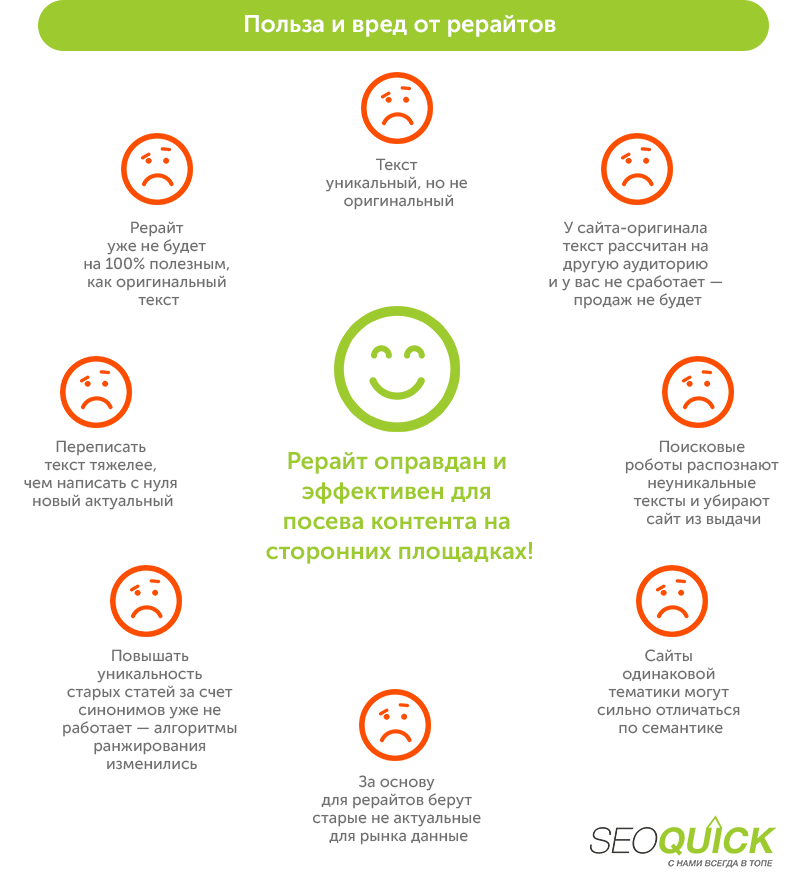
You should not write rewriting off entirely — it has kept one honest niche. That is adapting one piece for different external platforms as part of content marketing and link building. When you seed an article on 3–4 partner resources, each wants a unique text — and a light rewrite is justified here, because the core value (the original) lives on your site, while the external versions only bring traffic and links.
The second acceptable scenario is training junior writers. A deep rewrite of several sources with added structure and fact-checking is normal skill practice. But that is a learning stage, not a strategy for filling a commercial site.
In all other cases the rule is simple: if rewriting adds no new experience, data, or answer to a fresh intent — it harms the site rather than helps it.
Conclusions
- Uniqueness of words ≠ uniqueness of value. In 2026 Google ranks value, not "differentness."
- Rewriting, synonymizing, and spinning fall under scaled content abuse — a direct risk of demoting the whole site.
- Duplicates and cannibalization split authority and cost you citations in AI Overviews.
- AI uniqueness does not save you: detectors like Originality.ai recognize paraphrase with up to 96.7% accuracy.
- Instead of rewriting — collect real intent, add experience and data, tie the author in, measure the result. A light rewrite is honest only for external seeding.
Frequently asked questions
How does rewriting differ from copywriting?
Copywriting creates new value: the author studies the niche, audience, and competitors, formulates a USP, and writes the text from scratch. Rewriting only repackages someone else's material. That is why copywriting ranks, and rewriting increasingly does not.
Does the uniqueness percentage affect Google rankings?
Directly — no. Google has no "uniqueness percentage" metric as a ranking factor. What matters is originality of meaning and value, not the percentage of different characters. Chasing 100% uniqueness is pointless.
Will Google penalize rewriting?
If the rewriting is mass-produced and without added value — yes, under the scaled content abuse policy. A single quality rewrite with fact-checking and structure is not "fined" on its own, but it will not reach the TOP without new value either.
Can you make text unique via a neural network?
Technically yes, but it is pointless. Modern detectors (Originality.ai and analogues) recognize paraphrased and AI-spun content with over 96% accuracy. And Google still evaluates value, not the method of creation.
How to check uniqueness and quality without Russian services?
Use Originality.ai (AI + plagiarism), Copyscape (copy search), Grammarly (literacy), and Surfer (content audit and topic coverage).
What to do with old rewritten articles on the site?
Run a content audit. Update strong pages: add experience, data, fresh facts. Consolidate duplicates and cannibalizing pages via 301 into one canonical. Delete the hopelessly thin ones. Often this is more useful than new publications. SEO services from SEOquick will help with the audit and prioritization, and our AI tools will speed up the routine.
AI Content and Google in 2026: What Actually Gets Penalized (Spoiler — Not AI)
Google does not penalize text for being written by AI — that is the official position. Here's what scaled content abuse really is, what changed after the 2026 updates, and how to publish AI content that still ranks.
Read →
Stop blogging for the sake of blogging: launch AI tools that earn SEO traffic and leads
Why endless articles no longer work the same way and how to create AI tools, calculators, and interactive pages for SEO, GEO, and conversion.
Read →
Keyword Density in 2026: Why the «Perfect Percentage» Is a Myth
What keyword density and text spamminess mean in 2026. Why there is no ideal keyword percentage, how Google and AI search evaluate content, and what to use instead of chasing density.
Read →Want to apply this to your site?
We will review the current situation, find the first growth levers, and suggest a practical working format.