How to Write a Technical Brief in 2026: A Spec for Copywriters and Developers (With an AI Draft): SEOquick
A technical brief in 2026 is a contract between you and your contractor: goal, metrics, scope, and examples on a single page. We break down brief structure for copywriters and developers, ready-made templates, how to speed up the draft with AI, and which mistakes derail projects.


I will look at your site and answer your questions on the topic of this article. 30 minutes, no slide decks, no pressure.
Book a consultationA technical brief (TB) is a document in which the customer and contractor lock down the goal of the work, a measurable result, the requirements, deadlines, and examples. A good brief for 2026 follows the SMART principle: a specific task, measurable metrics, realistic scope, and a deadline. AI (ChatGPT, Claude, and the like) is great at assembling a draft in minutes — but the final version is always reviewed and approved by a human.
If you've ever hired a specialist for project work, you've certainly stipulated the requirements for its completion. Did you get the result you were counting on? If "yes" — the task was set correctly. If "no" — keep reading: below is a step-by-step guide on how to write a brief that a contractor will deliver on with minimal edits.
A TB is a document that clearly spells out the requirements for the work and is approved bilaterally: by both the customer and the contractor. In essence it's a contract between the business and the contractor: cost estimates, deadlines, acceptance of the result, and dispute resolution are all built on it. In 2026, a brief increasingly lives not in Word but in a "living" document — Notion, Google Docs, or Confluence — that is edited as the project progresses and is always available to both sides.
Most often a brief is written for an outsourced or freelance specialist — a person you may only communicate with online. Let's figure out which spheres have many remote workers:
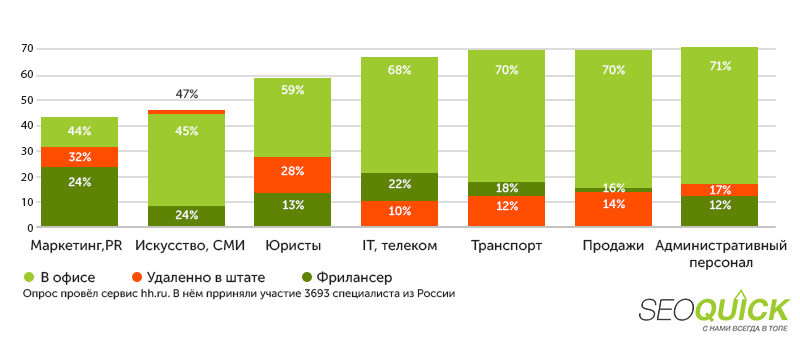
As you can see, practically any business sphere is suitable for hiring remote specialists. But finding a qualified contractor is half the battle. The main thing is to describe the task so they understand it the same way you do and execute it precisely. And here you can't do without a technical brief.
What, again? Traffic dropped and no sales? Then SEOquick will help you bring it all back
We'll attract organic SEO traffic to your site from the Google and Bing search engines.
We'll carry out internal optimization and SEO promotion work. We'll improve reputation, content. We'll do an audit and build up the link mass.
No black magic – only white-hat SEO methods!
Why you need a brief at all: 5 excuses that cost money
Are you still settling tasks "verbally" — in a five-minute call, without a written brief? Then you most likely blame a poor result on the contractor's lack of qualification rather than on the absence of a brief. This chapter is for you.
We live in an era of simplified processes, but a brief is not bureaucracy — it's insurance. Let's break down the five most common excuses:
- "I don't know what it is or how to write it." This article is the instruction. And a questionnaire from the contractor is a good start: by filling it out in detail, you kill two birds with one stone — you give the contractor an understanding of the task and effectively write your first brief.
- "Why complicate things — let's discuss it on the phone." That's a road to nowhere. You won't have a file with the requirements, and memory fails both sides. Plus the contractor may be in another city or country, and correspondence drags on for weeks. A brief, on the other hand, takes half an hour to write and needs no explanations.
- "I don't have time for bureaucracy." A brief is needed above all by you: it's your project, your reputation, and your goals. Half an hour on a brief saves days of rework.
- "We worked without briefs before — and it was fine." That means you got lucky or your views matched the contractor's. That happens rarely — you shouldn't count on luck in every project.
- "Price first, then the brief." The opposite is true: without details no contractor can name an exact cost. Topic, volume, uniqueness and structure requirements directly affect the price. Send the brief to candidates — you'll get both adequate estimates and an understanding of who can handle the task.
By spending half an hour once on a solid brief, you won't lose days to edits. If you need organic traffic and search engine promotion for your site, fill out the form below — we'll discuss a plan to grow your business.
How to correctly write a brief: structure and a 2026 checklist
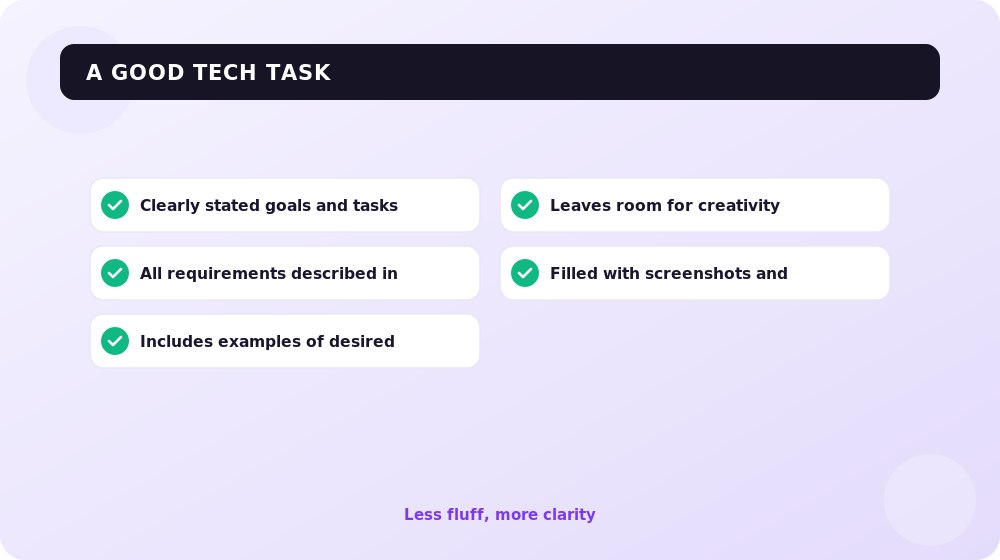
Almost everything depends on the quality of the brief: the result of the work, the timing, and the nerves of both sides. There is no universal "one-size-fits-all" template, but all competent briefs — whether for website developers, copywriters, or designers — share common traits.
What does a good brief look like?
The modern 2026 approach relies on the SMART principle — the task must be Specific, Measurable, Achievable, Relevant to the business goal, and Time-bound — a detailed breakdown of the method is in Asana's guide to SMART goals. Add to that five practical characteristics:
1. Clearly formulated
The customer clearly states the goal and tasks. You can't write "create a logo for a flower shop" — you need to specify the shape, colors, text, and goal (to sell, to grab attention). Otherwise the contractor will bury you in questions at every stage.
2. Measurable and detailed
Don't be afraid of overdoing the details: better "too much" than "too little." The key difference of a strong 2026 brief is measurable acceptance criteria. Not "a fast site," but "LCP under 2.5 seconds on mobile per PageSpeed Insights." Not "selling copy," but "a 6,000-character article, 100% unique, with the keyword in the H1 and the first paragraph." That way the result can be checked on a pass/fail basis.
3. Containing examples
Provide samples. If we're talking about copywriting, give a link to a text you like in style and topic. Good examples save dozens of hours of edits.
4. Leaving room for creativity
Lock down what's mandatory, but leave the contractor freedom where it's appropriate. Sometimes the contractor's ideas turn out stronger than yours.
5. Filled with illustrations and screenshots
Most people are visual. Charts, infographics, screenshots, and annotated images placed next to the requirements make the task clearer than paragraphs of filler.
A universal brief structure
To avoid missing anything, use a frame that works equally for content, design, and development:
- Introduction and context. General information about the project, business, and target audience — what an outside contractor doesn't know.
- Goal and metrics. What result and why. Example for a copywriter: "Retain subscribers in the base and softly sell educational products; goal — increase read-throughs to 60%."
- Requirements and scope. What's included in the task and what isn't. Number each point so it's easy to reference later.
- Acceptance criteria. A pass/fail checklist by which you accept the work.
- Deadlines and delivery format. The deadline, intermediate milestones, file formats.
- Examples and materials. References, logos, access credentials, brand guidelines.
- Feedback. Who answers questions and within what timeframe, how many edits are included in the cost.
For website development, add the technical part: requirements for the engine and hosting, page structure, functionality (forms, filters, cart), integrations, responsiveness, and a foundation for future SEO — for example, a pre-agreed semantic core and a clear URL structure.
And if you want to check the level of professionalism of your contractor in choosing headlines, then especially for you we created the free utility "Headline Quality Calculator", which will be useful both to SEO optimizers and to specialists in setting up contextual advertising.
How to use AI for a brief draft in 2026
In 2026, neural networks have become a standard tool for preparing documents. ChatGPT, Claude, and the like assemble a structured brief draft in minutes — but it's important to understand where their strength lies and where the limits are.
What AI does well: it proposes a structure and sections, turns your chaotic thoughts into a numbered list of requirements, generates options for acceptance criteria, and helps you formulate a SMART goal. It's convenient to work through chat "projects," where you upload a brand guide and examples — the model holds the context and tone across messages.
A working prompt looks like this: assign a role ("you are a product manager"), describe the project and audience, specify the format ("return a requirements table and an acceptance checklist in Markdown") and length limits. The more specific your inputs, the less filler in the output.
Where the limit is: models still make mistakes. According to 2026 research, the hallucination rate of top models ranges roughly from 3% to 19% depending on the task and reasoning mode. So an AI draft is a starting point, not the final version. The most reliable defense remains human review (human-in-the-loop): you proofread the figures, deadlines, and technical requirements and delete anything invented. The final brief is always approved by a human — that's who bears responsibility to the contractor and the business. We write more about AI-based tools in the AI tools section.
Analyzing technical briefs for specialists of different profiles
All explanations are better absorbed through examples. Let's compare bad and good briefs.
- A technical brief for a copywriter
| A bad brief | A good brief |
|---|---|
| Write a text about Instagram design. So that it's interesting and easy to read. | Write an article about how to run a visually beautiful Instagram. Content example by style: https://seoquick.com.ua/en/oformlenie-instagram/. Length no less than 5,000 characters, 100% unique. The keyword "Instagram design" — in the H1 and the first paragraph. Structure: 3 chapters + conclusions, at least 2 illustrations per chapter, links to 10 profiles with different styles. Success metric — average time on page of 2 minutes or more. |
In the first case the contractor is given total freedom — and can easily write something other than what's needed. The second has both scope and a measurable goal.
- A technical brief for a designer
| A bad brief | A good brief |
|---|---|
| Create a flip calendar for the company "Agro-Svit" for 2027. | Create an A2-format flip calendar (horizontal) for the company "Agro-Svit" for 2027. Corporate colors: blue, yellow, and white (the CMYK palette is attached). The monthly images should feature equipment from the company catalog (link in the materials). Deadline — June 25, 2026. Delivery format — a print-ready PDF mockup + the source file. |
With company data and a competent brief, the designer is highly likely to hit the customer's expectations on the first try.
- A brief for website development
| A bad brief | A good brief |
|---|---|
| Create a site for manicurist Olga. A business-card site with all the needed info. Prices average for the market, list them on the site. | Create a business-card site for manicurist Olga. Built from scratch, the logo is in the attached file. Pages: "About the artist," "Where we're located" (with a map), "Examples of work," "Prices." A pop-up with a phone number and an active "Ask a question" button. Two language versions: Ukrainian and English. A minimalist design, a beige-and-violet palette. Responsiveness: correct display on screens from 360px. Speed: LCP under 2.5 s on mobile. The goal — an interactive business card with prices and contacts. Reference example: https://beautynails.example.ua/. No additional built-in modules required. |
This example is the most extensive — building a site from scratch is the hardest. A real brief would also add the physical address, contacts, and a folder of the artist's work. Note: the technical requirements (responsiveness, speed) are set measurably. And so the budget in the brief does not drift from reality, first look at what website development costs and what goes into the estimate.
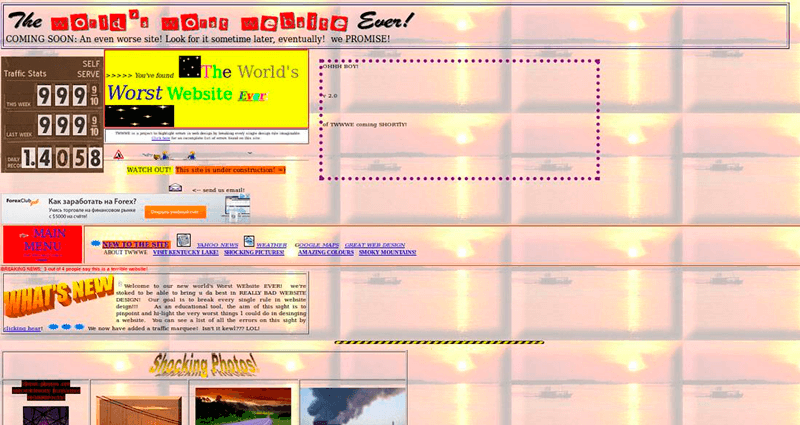
An abundance of images, different fonts, and loud colors make a site unreadable. And do you still think a site can be built without a clearly written brief?
Recommended reading:
What a poorly written brief threatens: common mistakes
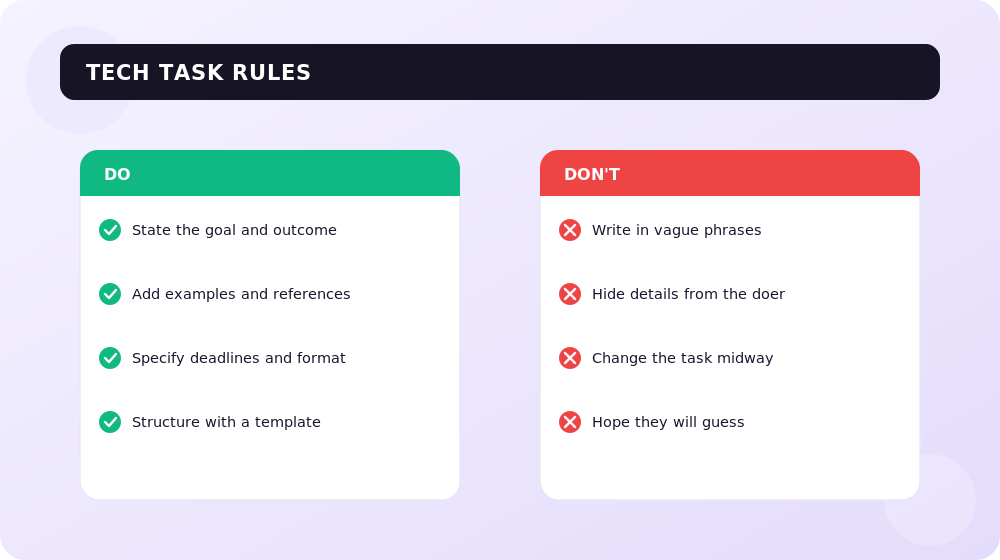
A bad brief threatens more than endless edits. Let's break down the main mistakes and their consequences.
Vague wording. "A convenient interface," "a modern design," "an interesting text" — everyone interprets these differently. That's mistake number one. The reverse also happens: technically everything is correct, but the business goal isn't solved. The cure is measurable acceptance criteria.
Possible consequences of a weak brief:
- Financial losses. Every extra iteration costs money: usually only the first 3-5 edits are included in the estimate. By spelling out the requirements upfront, you stay within budget.
- Reputational risks. A "raw" brief for a law firm's site will turn an official resource into something resembling a chat with a friend — and clients will go to competitors.
- Time losses. Making edits drags on for weeks, and time is money and reputation.
And most importantly — remember clarity: people understand the very same words differently.
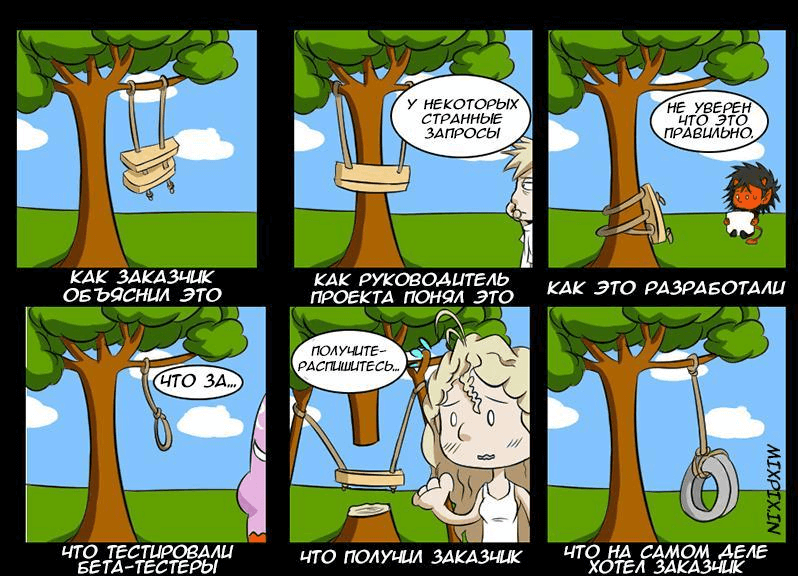
Frequently asked questions about the technical brief
How does a brief differ from a questionnaire?
A questionnaire is filled out by the customer to provide inputs. A brief is the final document with requirements, metrics, and acceptance criteria that both sides approve. Often the questionnaire becomes the basis for the first brief.
How long should a brief be?
Exactly long enough for the contractor to understand the task the same way you do, and no longer. A simple text — half a page; a site from scratch — several pages with a technical part. A short but measurable brief beats a long, watered-down one.
Can a brief be written with ChatGPT or another AI?
Yes, AI quickly assembles the structure and a draft. But models make mistakes (hallucinations in 2026 range from 3% to 19% depending on the task), so figures, deadlines, and technical requirements must be proofread and approved by a human.
What metrics should be included in a brief?
Those that can be verified: for text — volume, uniqueness, keyword occurrence, time on page; for a site — load speed (LCP), responsiveness, form conversion. A metric turns a wish into a verifiable result.
Who is responsible for the result if an AI draft was used?
The human who approved the brief. AI is only a preparation tool: responsibility to the contractor and the business lies with the customer who signed off on the final version.
Where should you store and maintain a brief?
In 2026, "living" documents are more convenient — Notion, Google Docs, or Confluence: they can be edited as the project progresses, shared with the contractor, and keep a change history. The key is to lock down the approved version.
Conclusions
A technical brief isn't bureaucracy — it's a contract that saves money, time, and nerves. A strong 2026 brief follows SMART and contains measurable acceptance criteria, examples, and clear scope.
The main advantages of a competent brief:
- versatility — it works for content, design, and development;
- measurability — the result can be checked pass/fail, not "I like it / I don't";
- reliability — in disputes you can always return to the approved terms;
- speed — AI helps assemble a draft in minutes, and a human takes it to the finish.
Even if your first brief isn't perfect — don't abandon the practice. Each time, the briefs get more precise and the results get closer to expectations.
How to Write Sales Copy: Structure, 8 Formulas, Ready-Made Templates and Examples
Sales copy without fluff: the structure of a page that sells, 8 formulas (AIDA, ODC, PMHS…), a real first-screen breakdown, ready-made templates and prompts, SEO logic and metrics. SEOquick’s experience: a ×7 traffic case built on commercial pages.
Read →
SEO in 2026: The Complete Guide to Promoting Your Website
How to promote a website in Google in 2026: AI Overviews and AI Mode, E-E-A-T, technical SEO, link building, GEO. SEOquick's complete guide with case studies and a checklist.
Read →
Ecommerce SEO in 2026: A Checklist for AI Search and Zero-Click
An ecommerce SEO checklist for 2026: a product feed tuned for AI Mode, Product schema, AI-citable product content, technical SEO for checkout and cart. A hands-on breakdown with real numbers from SEOquick.
Read →Want to apply this to your site?
We will review the current situation, find the first growth levers, and suggest a practical working format.