How to run a Facebook group in 2026: a community guide for business
A Facebook group is no longer a feed of good-morning posts but a living channel of trust, support, and leads. Here is how to build a community, a content plan, moderation, and analytics in 2026.


I will look at your site and answer your questions on the topic of this article. 30 minutes, no slide decks, no pressure.
Book a consultationTo run a Facebook group that benefits your business in 2026, define the community goal, build a content plan from varied formats, set up moderation and engagement, promote the group, and measure not likes but engagement, leads, and retention. A community is not a board of promotions but a channel where people stay for value, answers, and conversation. Below is a step-by-step breakdown of how to launch, fill, and grow a Facebook group, and when a modern alternative such as a Telegram community fits better.
Before building an SMM strategy, clearly fix the goal of creating the group. Social communities work at different stages of the digital funnel:
- at the awareness stage — when you need to spread the word about a new product, brand, or event and attract new people;
- at the trust and loyalty stage — for reputation management, support, and repeat sales.
With a curated community you can collect feedback, drive people to your site, keep in touch with your customer base, and gently generate leads. According to Hootsuite, around 1.8 billion people visit Facebook groups every month — a huge reach for niche communities.
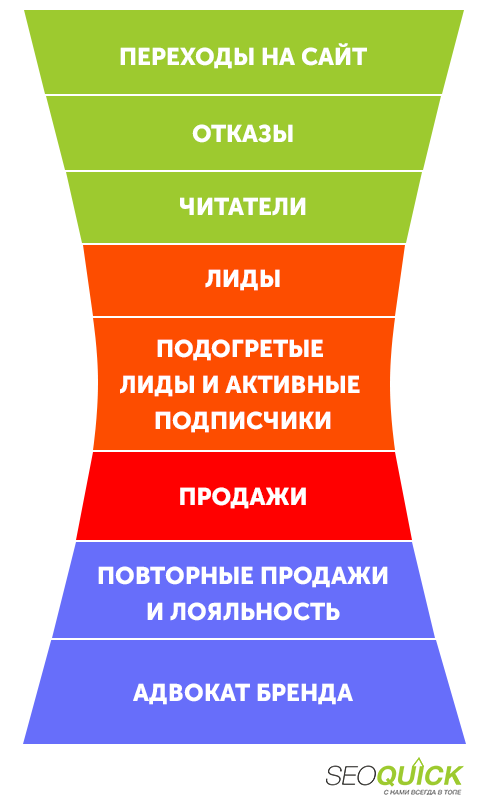
Some communities are built for image, others for sales. Focus on the main goal when you create content and measure results — the approach to a business page and a closed group differs.
Also watch the video by Alyona Polyukhovich, in which she explains how to set up Facebook ads correctly, define the target audience, work out the campaign budget, and much more.
Business page or group: what to choose on Facebook
Facebook lets you run two fundamentally different community formats, and each has its own role.
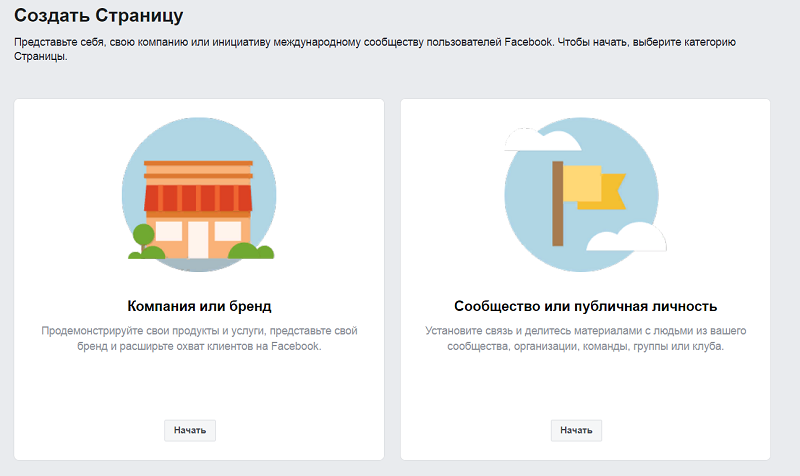
1. Business page (Page)
This is always a public platform, so it is ideal to:
- list your services and showcase products;
- share news and announcements;
- collect reviews and badges;
- run ads and lead campaigns;
- list company contacts.
A page gives wide reach, anyone can follow it, and the admin can easily track view, engagement, and click statistics.
2. Group (Group)
A Facebook group can be public or closed (private).
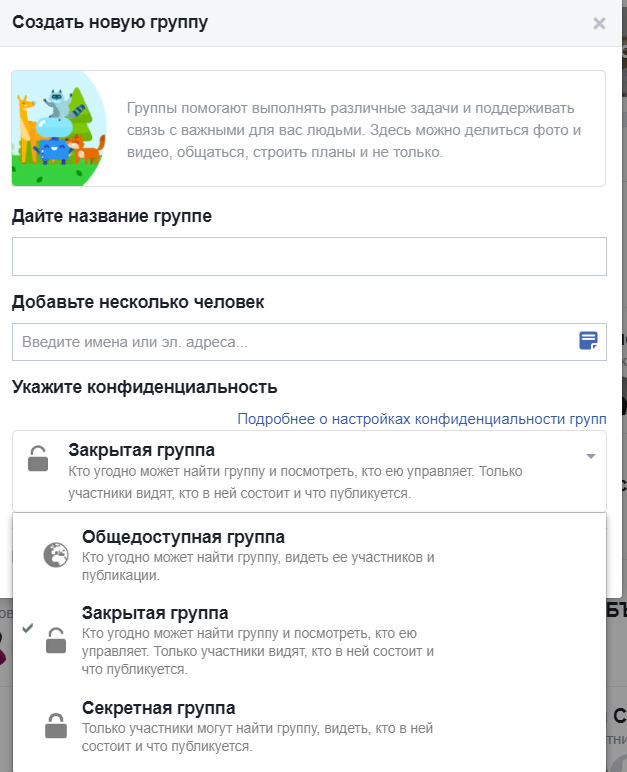
The choice depends on how narrow your audience is. According to Sprout Social, closed communities deliver the deepest connections: members ask questions, share experience, and create user content more willingly. Groups work well for:
- expert findings and breakdowns;
- engagement posts in a question-and-answer format;
- user-generated content and case studies;
- polls, quizzes, and themed weekly threads.
The basic 2026 rule: a page is for reach and ads, a group is for trust, support, and retention. Often a business benefits from both formats at once.
Recommended reading:
Group content plan: 6 key principles
1. Pick the optimal content formats
Facebook offers many formats: text posts, images, infographics, carousels, Reels, and live streams. Unlike platforms dominated by a single format with strict text limits, Facebook gives you far more room to maneuver.
2. Keep the feed balanced
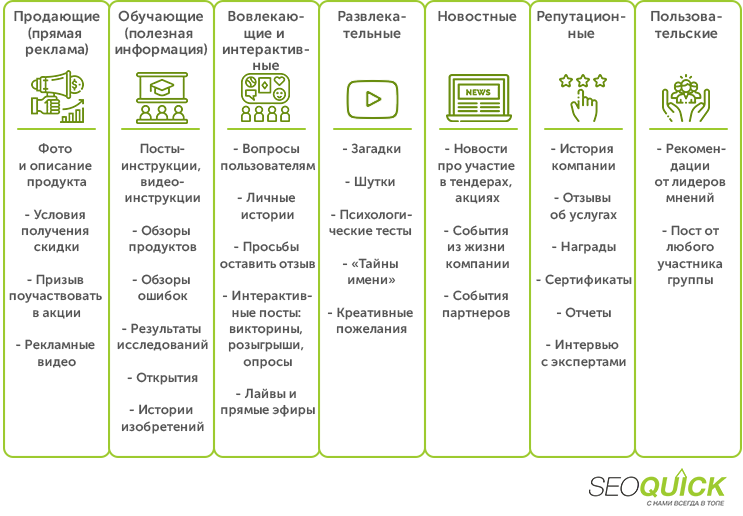
Do not let the community feed be dominated only by ads, only by memes, or only by long educational longreads. Giveaways, promos, and live streams that mass-engage people should also be dosed. You need balance! Any post, even a viral one, must be created for the benefit of target customers, not for random followers. A key stage here is media planning, and it is easier to trust to specialists: simply order SMM promotion from us through the request form.
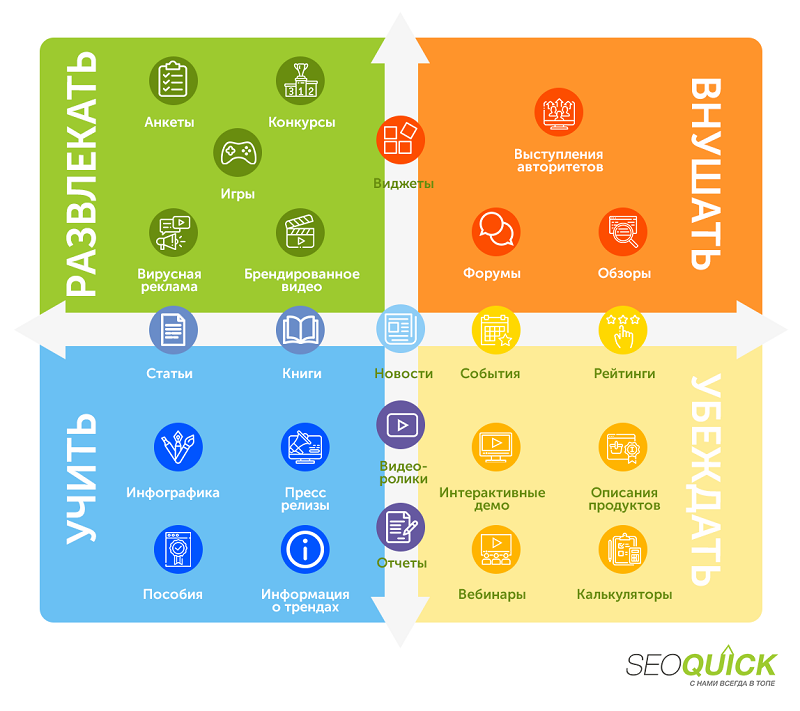
A media plan is built around engagement types: teach, persuade, entertain, and draw into dialogue. Each post closes its own task. Practical rules:
- alternate educational, selling, entertaining, and engaging posts;
- do not publish content that needs a fast response on Friday and Saturday: activity drops on those days;
- remember the lunch-break rule — that is when the business audience scrolls the feed.
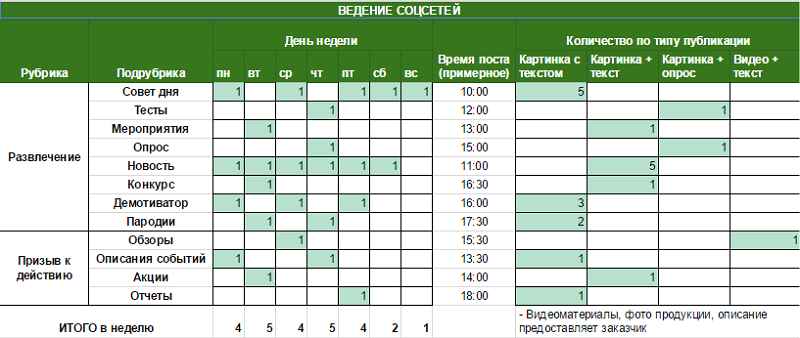
Keep a balance between the number of posts and their frequency. We help build a media plan based on audience psychology, the Facebook algorithm, and competitor content.
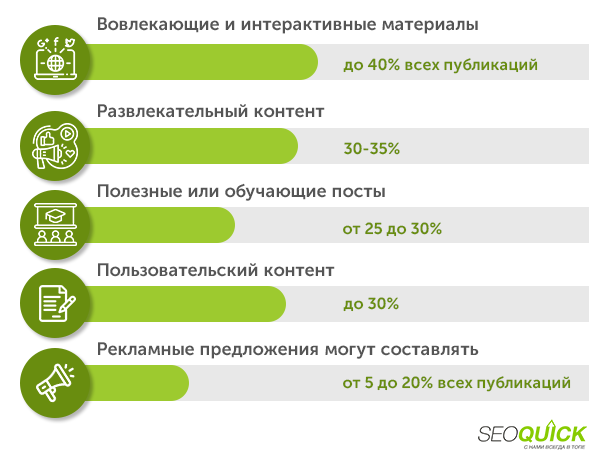
A generalized content formula for a community:
- engaging and interactive materials — up to 40% of posts;
- entertaining content — 30-35%;
- useful and educational posts — 25-30%;
- user-generated content — added as the situation calls for it;
- promotional offers — from 5 to 20% of all posts.
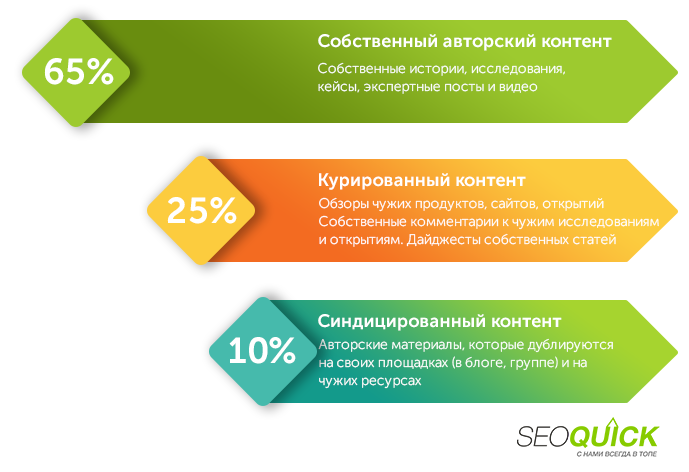
3. Create at least 65% unique original content
The Facebook algorithm values fresh, exclusive information and lowers the reach of communities that live on reposts and copied images.
A useful observation: users react more vividly to real photos of the company, staff, and products than to flawless stock shots — the same goes for real-life stories.
4. Deliver content at the right time
In the content plan it helps to alternate posts that solve different tasks: entertain, teach, persuade, draw into conversation, and sell.
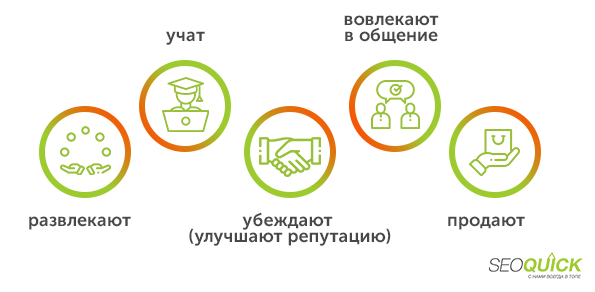
The return on a post depends on the audience's mood and loyalty. People repost entertaining notes on Friday evening, join contests on weekends, and for news, cases, and research pick a convenient weekday time.
5. Watch your competitors
See what formats competing communities use: how sparingly they use humor, how often they run contests and live streams. For deep analysis, gather data on 7-10 communities. By the way, the discussions and polls in competitors' groups are an excellent source of market insights.
6. Be useful to your audience
The main guide when creating content is the interests and lifestyle of your potential customers. Picture the target audience clearly before launch, and periodically track what buyers discuss and run polls — this shows where the content plan has gaps.
How the Facebook algorithm works in 2026
For posts in a business community to be visible, you need to understand the feed logic. According to DigiNewbie, the current Facebook algorithm relies on several principles:
- Every user sees an individual feed built from their interests, follows, and saves. You should account for the same audience parameters.
- Priority goes to content from close people and favorite communities (the ones a person visits most often), as well as posts that spark meaningful discussion.
- Unique content ranks higher: the algorithm promotes original sources with exclusive material.
- Facebook loves video, but native clips and Reels uploaded straight to the platform get more reach than links to external video hosts.
- Posts published inside the platform are easier to promote than posts that lead people to a slow-loading external site.
- Facebook fights misinformation and clickbait headlines, especially if they lead to ad-heavy pages.
- Interactive and entertaining content, live streams, and posts that get actively commented on receive priority.
The takeaway: content must be fresh, unique, credible, and able to provoke real dialogue — not just likes.
Engagement and moderation: how to retain a community
According to Single Grain, live communities reach 200-400% engagement — meaning each member makes several interactions a month, many times higher than the typical 1-2% for a regular feed. Achieving this requires systematic engagement and moderation.
On interacting with the audience
- Like, comment on, and pin strong member posts, address people by name — personalization sharply boosts activity.
- Start a regular tradition: for example, a story of the week or a question of the week, where members share experience in a single format.
- For the group to rise in members' feeds, comments matter: use provocative questions, live streams, and quizzes.
- The number and activity of members affect group reach. If the goal is sales, attract a fan base with viral content and good offers. If the goal is quality traffic and VIP clients, focus on expert posts, business stories, and interviews.
- Motivate members to create user-generated content.
- Invite thought leaders to live streams and masterclasses — they provide valuable expert content and improve reputation.
Moderation and automation tools
In 2026, manual moderation no longer scales. Facebook's built-in Admin Assist tool works as a rules engine: "if a post contains a link and the author has been in the group for less than 7 days, send it to pending." This way you automatically filter out spam, screen newcomers, and keep the feed clean. External services (for example, for auto-moderating comments) hide spam and abuse without manual intervention. Be sure to appoint several admins and write out community rules and an escalation path — this protects both members and the brand from single-moderator burnout.
Promoting the group, timing, and posting frequency
- Use cross-promotion: by talking about thought leaders, you attract their audience to your community.
- Hashtags simplify running a group — they let you mark out sections, ease navigation through old posts, and attract target users via popular hashtags.
- On weekdays, posts published from 1:00 to 4:00 PM get the most responses and likes, while engagement is especially high at the end of the work week.
- To retain the audience, 2 substantial posts a week are enough, but for active community growth post more often — ideally 3-5 times a week on a stable schedule.
- Boost reach by combining channels: video marketing, search promotion, and PPC advertising bring warm traffic into the community from different sources.
Leads and community monetization
A group rarely makes money directly — it is the top of the funnel. Following guides by Groupboss and Cometly, the classic path looks like this:
- Top of funnel — a free community where people ask questions, talk, and get value;
- Middle of funnel — email capture through a lead magnet (checklist, template, mini-course);
- Bottom of funnel — paid products, services, consultations, or a closed premium club for the most active members.
Additional sources: affiliate marketing, direct sponsorships from brands interested in your niche, and pairing the group with a business page where you can run lead campaigns. Important: leads are gathered gently, through value and trust, not aggressive selling in every post.
Facebook or Telegram: when a modern alternative fits
Facebook remains a strong choice for broad niches, local business, and a 25-45 audience. But in 2026 many brands complement it with Telegram communities and channels: faster message delivery, easier paid closed clubs, and direct communication without an algorithmic feed. The community logic stays the same: content plan, moderation, engagement, and value. Often the best strategy is to run both a Facebook group (for reach) and a Telegram community (for a loyal core), funneling the most engaged people from one to the other.
FAQ: common questions about running a Facebook group
How do I start creating a Facebook group?
Start with the goal and the audience profile. Decide why you need the group — reach, support, sales, or community — then choose the format (page or closed group), write the rules, and seed the community with loyal customers so there is live activity from day one.
How many times a week should I post?
To retain the audience, 2 substantial posts a week are enough; for active growth, 3-5 on a stable schedule. Regularity and a balance of formats matter more than quantity for its own sake.
How do I increase engagement in the group?
Ask questions, run polls and live streams, start regular weekly threads, address members by name, and encourage user-generated content. Reply quickly — response speed directly affects activity.
How do I moderate the group to avoid spam?
Set up Admin Assist with rules for links and newcomers, appoint several admins, and write community rules and an escalation path. At high volumes, add external comment auto-moderation services.
Can you make money from a Facebook group?
Facebook does not pay directly for running a group, but a community works great as the top of the funnel: a lead magnet and email, paid products or a closed club, affiliate marketing, and sponsorships. The money comes from trust built by content.
Facebook or Telegram — which to choose for a community?
Facebook is for wide reach and ads, Telegram is for a loyal core, closed clubs, and fast communication. Often it is best to run both channels and funnel the most engaged people into the more intimate Telegram.
The key takeaways
- Choose the community format — page or closed group — based on your business goals.
- Make the group convenient: sections, hashtags, clear navigation, and firm rules.
- In the content plan, alternate expert, engaging, entertaining, and selling posts, keeping at least 65% unique content.
- Set up moderation through Admin Assist and an admin team.
- Measure not likes but engagement, response speed, leads, and retention — these show the real value of a community.
What, again? Traffic dropped and no sales? Then SEOquick will help you bring it all back
We will attract organic SEO traffic to your site from Google and Bing search engines
We will carry out on-page optimization and SEO promotion. We will improve reputation and content. We will run an audit and grow your backlink profile.
No black magic – only white-hat SEO methods!
X (formerly Twitter) promotion for business in 2026: a marketing guide
How to promote a business on X (formerly Twitter) in 2026: the For You algorithm, post formats, threads, video, Spaces, X Premium, and X Ads. Content plan and analytics.
Read →
SMM Promotion in 2026: The Complete Social Media Guide for Business
SMM promotion for business in Ukraine: Instagram, TikTok, Telegram, YouTube, LinkedIn. 2026 audiences, formats, organic vs paid, content plan.
Read →
Selling on Facebook in 2026: business page, Shops, community and Advantage+
How to build sales on Facebook: business page, Facebook Shops and catalog, groups and community, Messenger bots, Advantage+ ads, Conversions API, content funnel, and metrics.
Read →Want to apply this to your site?
We will review the current situation, find the first growth levers, and suggest a practical working format.