Crowd marketing in 2026: earn trust, questions, and leads without spam
Crowd marketing in 2026 is not about gaming forum links — it is about taking part in real conversations. We break down platforms, rules, metrics, and why community discussions are now cited by AI.


I will look at your site and answer your questions on the topic of this article. 30 minutes, no slide decks, no pressure.
Book a consultationCrowd marketing in 2026 means a brand taking part in real discussions on forums, Q&A services, Reddit communities, and YouTube, where you help people and naturally mention your product. Unlike in 2019, crowd marketing today solves far more than the link-mass problem: community mentions have become a signal for AI search. Models like ChatGPT and Google AI Overviews increasingly cite living user opinions rather than corporate websites — and crowd marketing helps your brand land in those answers.
New business owners constantly ask the same question: how do you grow your customer base with minimal spend? How do you get people interested in a product without pouring huge sums into ads? Crowd marketing helps with exactly that — but only if you do it right.
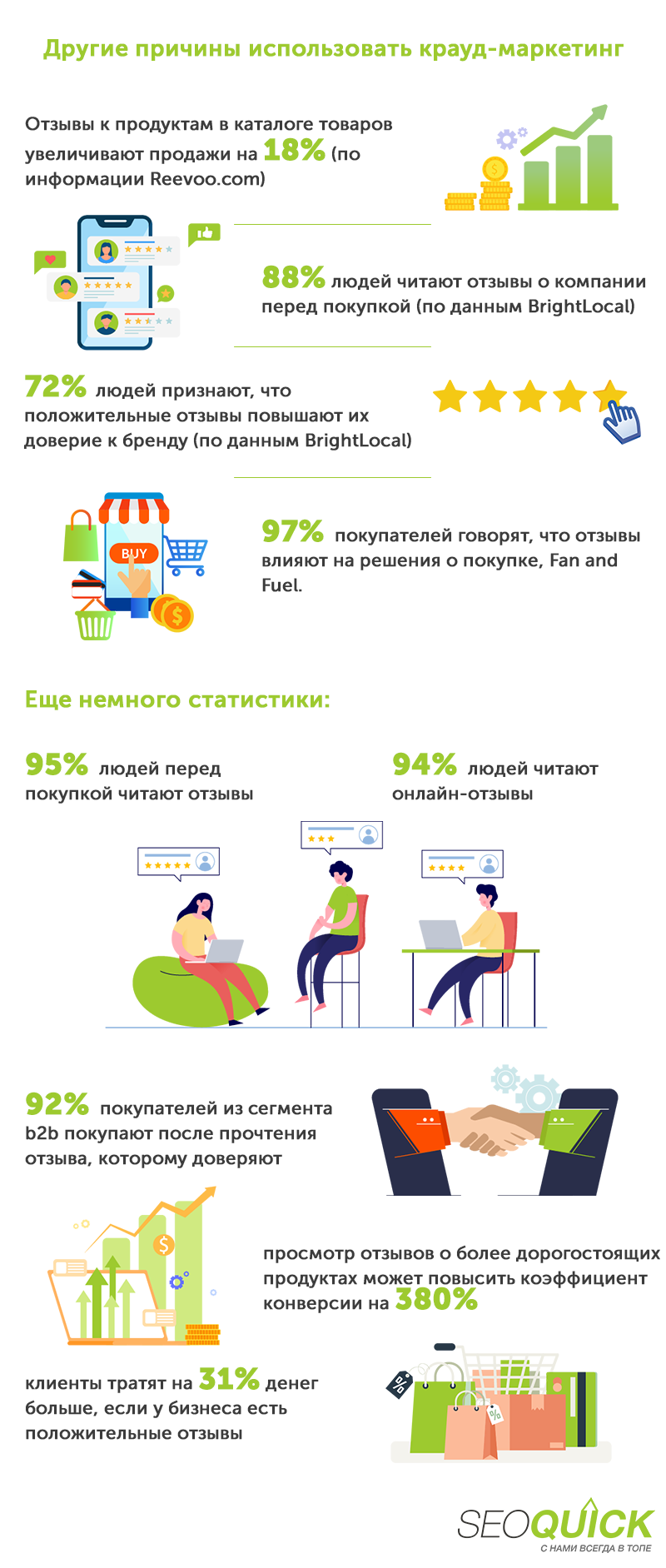
But there is a flip side: links and mentions can start working against you. That happens when you pick irrelevant platforms, write template comments, or rely on automated mass posting. In this article I walk through every stage so your crowd marketing strategy works under the realities of 2026.
You can't see it yet, but it's there! Find out how SEOquick will bring you traffic
We'll set up Google Ads context properly, with heavy traffic and a high return on investment
We'll precisely pick the type of advertising that fits your business and turns a profit
Our targeting always hits the mark!
What crowd marketing is in 2026
The word comes from crowd. The idea is that company representatives take part in discussions on specialized platforms, share experience and recommendations, and mention the product at the right moment. These are forums, Q&A services, review aggregators, niche communities, and comments under videos.
The meaning of crowd marketing has shifted a lot in recent years. While in 2019 the main goal was link mass for search promotion, by 2026 three tasks have moved to the front:
- Trust and reputation. People make decisions based on the opinions of other people, not on a brand's advertising promises.
- Visibility in AI search. Models cite community discussions as the "voice of real users."
- A stream of questions and content ideas. Crowd marketing shows what your audience actually cares about.
One thing matters above all: the comment has to be useful in its own right. Only then will moderators leave it up and other members take it seriously. Crowd marketing in 2026 is not advertising disguised as a "user tip" — it is honest expert participation.
Why crowd marketing matters for AI search
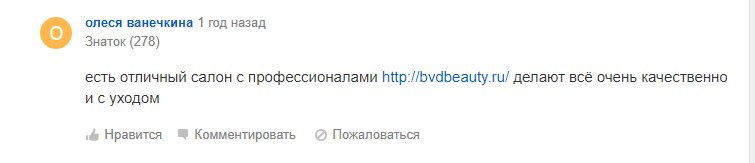
This is the biggest change of recent years. According to industry research on AI citations, Reddit has become one of the most cited sources in ChatGPT and Google AI Mode answers. Models perceive community opinion as more credible than marketing copy on a brand's website.
The logic is simple: if your site says a product is "the best" but five people on a forum call it "average," AI is more likely to repeat the forum's verdict. That is why participating in discussions has become part of optimization for AI search (AEO/GEO).
Another key factor is freshness. Research shows that a significant share of AI citations comes from content published or updated within the past year. Communities generate fresh discussions constantly, unlike static pages. And the voting system (upvotes, confirming replies) gives models a quality signal: an answer with a hundred upvotes reads as a validated consensus.
The takeaway: brands with a large number of community mentions have several times higher odds of being cited by AI systems than those with almost no community activity.
Benefits and risks of the method
Crowd marketing still delivers a combined effect, but it has real downsides too. Let's be honest about both.
What you gain
- Natural signals for SEO. Despite the annual claims that "links don't work," relevant mentions and clicks still influence rankings. Crowd links read as natural.
- Targeted referral traffic. When you join discussions with your audience, you get clicks from people genuinely interested in the topic.
- Growth in branded search. After community activity, people start searching for your brand directly — one of the best signs that a conversation has landed.
- Reputation and negativity management. Expert answers help shift the focus from isolated negative reviews to the product's real value.
- Content ideas. Frequent audience questions turn into articles, videos, and FAQ blocks.
What you risk
- Penalties for link manipulation. Google's link spam policy explicitly names "forum comments with optimized links in the post or signature" as an example of spam. Google's anti-spam systems now devalue such links almost instantly.
- Backfire effect. Template comments and obvious ads annoy the audience and can hurt reputation more than they help.
- Not for narrow niches. If a product has a very small, specific audience, finding live platforms is hard.
- Labor-intensive. The process is nearly impossible to automate without losing quality — you need people who understand the topic.
Who crowd marketing suits
Crowd marketing works well for cloud services, projects with a large catalog, brands with a genuinely new product and a low price point, and online stores across niches — that is, where the audience is broad and purchase decisions are often spontaneous.
The method is a worse fit for companies with a narrow regional focus, very expensive products, and complex B2B segments with a small target audience. If you sell luxury furniture or industrial equipment at a high price, it is better to bet on other channels — expert content, PR, and targeted outreach.
Where to work: types of platforms
Before you start, study each platform's rules — posting spam or a comment that breaks the requirements leads to a ban. Let's look at the main platform types relevant in 2026 (no Russian resources — the focus is on Ukrainian and global communities).
Forums and niche communities
The crowd-marketing classic. Use "live" forums where new topics keep appearing. Write strictly on point — answering a specific question. If there is no fitting discussion, start your own. For Ukrainian projects, niche industry forums and specialized communities work well.
Reddit and niche communities
The key platform for AI visibility. Find relevant subreddits, participate consistently, give detailed helpful answers — and don't sell outright. Reddit punishes self-promotion harshly but rewards expertise generously: upvotes amplify visibility both inside Reddit and in AI answers.
Q&A services (Quora and similar)
Question-and-answer sites let you respond to people's specific queries. Someone asks what equipment a beginner pastry chef needs — you give a reasoned answer and provide an example. Build an expert profile and answer only where you can genuinely help.
YouTube
Comments under topical videos and descriptions on your own clips are an underrated channel. Relevance is critical here: an irrelevant link under someone else's video looks like spam.
Review aggregators and content platforms
A detailed honest review on an aggregator site, or a comment under a relevant article in online media, helps tell people about the product. The key is real experience, not a template.
A strong scenario: how to do it naturally
Good crowd marketing is a system, not a pile of random links. Here is a working 2026 scenario:
- Collect audience questions. What gets asked most often on forums and Q&A? What problems do people discuss? Write a list — it is your topic map.
- Build an audience profile. Region, interests, spending power, key pain points. Without this you won't know where and what to write.
- Pick platforms by criteria. The topic must reflect your product; geolocation must match the market; the platform must be alive (fresh discussions within the past month), with real traffic and no over-spamming.
- Create realistic accounts. A filled-out profile, a real person's avatar, a real name. Trust in the seller noticeably raises the likelihood of a purchase when reviews look verified rather than anonymous.
- Write stories, not ads. Personal experience, specifics, well-written text. Use brandless (non-anchor) links — they look more natural. Link not only to yourself but also to useful third-party material.
- Turn topics into content. Convert the most frequent questions into articles, videos, and FAQs — that is how crowd marketing plugs into the overall growth system.
And be transparent. Regulators (including the FTC) in 2026 require disclosure of a brand connection to be obvious to an average reader. An honest "I work at this company, but objectively here's the deal" earns more trust than disguised advertising.
Metrics and measuring effectiveness
If you run several channels, track the return on crowd marketing separately. What to watch:
- Referral traffic and post-click behavior — do people come, and what do they do on the site.
- Branded search — do direct queries for your brand grow after activity.
- Leads with UTM tags — how many inquiries the channel brought.
- Questions turned into content — how many topics you converted into articles and videos.
- Platform quality and moderation — where your comments stay and where they get removed.
It is convenient to track the link profile in Ahrefs, Majestic, and similar tools. Remember: crowd marketing targets a long-term effect. Judging results after a month is too early — the most telling campaigns run for three months and longer.
Tools for crowd marketing
Since crowd marketing involves a lot of routine tasks, use tools:
- Google advanced search. Helps you find fresh, relevant discussions. Learn the search operators and use them to discover topics.
- Google Alerts. Free notifications about new mentions for your keywords — delivered to your inbox.
- Social and media monitoring services (for example, Talkwalker, Brand24) — find brand mentions and discussions across the web and save time on platform hunting.
FAQ: common questions about crowd marketing
How is crowd marketing different from regular link building?
Link building aims first at acquiring links, while crowd marketing aims at joining live conversations. The link is secondary here: what matters is value for the audience and a brand mention in the right context. We cover link strategies in detail in our article on link building for the English-speaking market.
Is crowd marketing dangerous for SEO?
It is dangerous if you do it like spam: template comments, optimized anchors, mass automation. Google explicitly calls this a violation and quickly devalues such links. Natural participation with non-anchor links in relevant threads is safe.
How many comments should you publish?
Fewer but better. A handful of thoughtful expert comments on live platforms will do more than dozens of template ones. Consistency and relevance matter, not volume.
Why do AI models cite forums instead of my site?
Because AI systems treat community opinion as more credible and independent than a brand's marketing copy. To get into AI answers, you need real people talking about you in discussions — and that is exactly what crowd marketing is for in 2026.
Do you have to disclose a brand connection?
Yes. Transparency in 2026 is both a regulatory requirement and a trust factor. Open expert participation works better than disguised advertising, which moderators remove anyway.
Does crowd marketing work for B2B?
To a limited extent. For complex, expensive B2B products with a narrow audience, crowd marketing returns less — expert content, case studies, and targeted outreach work better there. But even in B2B, participating in specialized professional communities helps reputation.
Conclusions
Crowd marketing in 2026 works when a brand takes part in real conversations rather than disguising advertising as a "user tip." Usefulness, transparency, and analytics matter more than the number of mentions.
The method still helps with SEO, reputation, and traffic, but its main new advantage is visibility in AI search: models increasingly cite community discussions. Make crowd marketing part of your growth system: collect audience questions, give expert answers, turn frequent topics into content, and measure referral traffic and branded search. Fewer comments, but on quality live platforms and consistently — that is the winning approach.
Link building in 2026: build authority without link spam
Modern link building: Digital PR, outreach, crowd marketing, directories, rel sponsored/ugc/nofollow, anchor risk, source quality, and measurement.
Read →
Search Everywhere Optimization: Ranking on TikTok, YouTube, Reddit and AI Search
Your customer does not only search on Google: 49% of consumers search on TikTok, Reddit pulls 842M organic clicks a month, and YouTube is the source of roughly one in four AI Overview citations. Here is how a business owner picks 2–3 platforms without burning the budget.
Read →
GA4 for SEO and marketing: 8 settings that save time
How to configure Google Analytics 4 to see not only traffic, but also leads, questions, content gaps, and pages with growth potential.
Read →Want to apply this to your site?
We will review the current situation, find the first growth levers, and suggest a practical working format.